Construction sites generate plenty of waste. Broken concrete, old asphalt, demolished pavement and other materials can quickly pile up, especially during roadwork, demolition and site preparation projects. This is where concrete and asphalt recycling can make a real difference.
The usual response is simple: load the material onto trucks and haul it away.
But that approach can become expensive fast.
Every truck leaving the site means another trip, another driver, another fuel expense and another opportunity for traffic, scheduling problems or delays. When a project involves hundreds or thousands of tons of material, transportation can become one of the biggest hidden costs.
Instead of treating demolished material as something that needs to leave the property, contractors can process suitable material closer to where it is generated. With the right crushing and screening setup, old concrete and asphalt can be transformed into reusable aggregate for construction applications.
For Michigan contractors, that can mean fewer truck trips, lower transportation expenses and a smoother project from start to finish.
Why Truck Trips Matter More Than Contractors Think
Hauling looks straightforward on a project estimate. Material gets loaded, a truck carries it away, and the truck returns.
The problem is the volume.
Imagine a large demolition or road reconstruction project producing several hundred loads of concrete and asphalt. The contractor is now dealing with a constant cycle of loading, transportation, unloading and returning.
Fuel costs add up. Driver hours add up. Equipment sits idle while crews wait for trucks. Traffic conditions can create additional delays. Disposal or tipping fees can increase the final bill.
There is also the simple issue of coordination.
If trucks do not arrive when expected, the excavator may sit unused. If the processing area becomes overloaded, crews may have to stop work. If disposal facilities are busy or located farther away than expected, the original schedule can quickly change.
Reducing the number of truck movements can address several of these problems at once.
That is one reason recycling concrete and asphalt is becoming a practical consideration for contractors who want tighter control over project costs.
How On-Site Recycling Reduces Truck Traffic
The basic idea behind on-site recycling is fairly simple.
Rather than immediately hauling demolished concrete and asphalt away, recyclable material can be processed closer to the project.
Concrete can be crushed into different aggregate sizes. Asphalt pavement can be processed into reclaimed material suitable for reuse in appropriate applications. Screening can help separate material according to size and intended use.
The result is a material that can potentially remain within the project rather than making multiple trips to an outside location.
Consider a contractor removing an old parking lot.
The traditional process might look like this:
- Break up the existing pavement.
- Load the material into trucks.
- Haul it to a disposal or processing facility.
- Pay transportation and disposal costs.
- Purchase aggregate for the next stage of construction.
- Bring new material back to the site.
With a well-planned recycling strategy, some of that material may be processed and reused much closer to the project.
That can eliminate a significant amount of back-and-forth transportation.
Fewer Loads Can Mean Lower Project Costs
Truck mileage is only one part of the equation.
Contractors also have to consider loading time, driver wages, fuel consumption, disposal charges, scheduling and equipment utilisation.
Suppose a project requires dozens of truckloads to remove old pavement. Each load represents a cost. Now consider that some of the material could instead be crushed and reused on the same project.
The savings can extend beyond the hauling bill.
Less material leaving the site can reduce disposal requirements. Reusing suitable aggregate can reduce the amount of new material that needs to be purchased and transported back to the site.
This does not mean every project will benefit from recycling every piece of demolished material. Site conditions, material quality, specifications and intended applications all matter.
But for the right project, the numbers can make a strong case.
What Materials Can Be Recycled?
Concrete and asphalt are particularly useful materials for recycling because they can often be processed into aggregate or reclaimed pavement materials.
Concrete from sources such as:
- Demolished buildings
- Foundations
- Sidewalks
- Driveways
- Parking lots
- Curbs
- Road structures
may be suitable for crushing, depending on its condition and contamination.
Old asphalt pavement can also be processed for reuse in suitable construction applications.
However, not everything that looks like recyclable material should automatically go into a crusher.
Soil, wood, plastic, excessive debris, metals and other contaminants can affect the quality of the finished product. Contractors should understand what materials are acceptable before processing begins.
That is where experienced contractors concrete recycling support can be valuable.
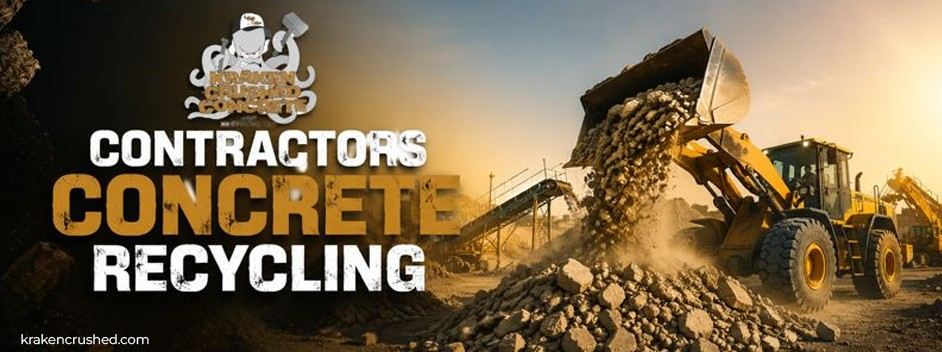
Recycling Can Reduce Empty Truck Miles Too
There is another side of the transportation equation that is easy to overlook.
Suppose a contractor removes old concrete and hauls it away. Later, the same project requires aggregate for grading or another construction application.
Trucks may then need to return with new material.
The contractor has effectively paid for transportation in both directions.
A recycling strategy can change that equation.
When suitable material is processed and reused closer to the jobsite, contractors may reduce the amount of material that has to leave and the amount of replacement aggregate that needs to be brought back.
That means fewer loaded trips and potentially fewer empty return trips.
For large Michigan construction projects, those transportation efficiencies can become significant.
Michigan Projects Have Their Own Transportation Challenges
Michigan contractors know that distance matters.
A project in one part of the state may have very different hauling considerations from a project in another. Urban traffic, rural distances, seasonal conditions and road restrictions can all affect transportation schedules.
Winter adds another layer of complexity.
Longer travel times and difficult driving conditions can make an already busy hauling schedule harder to maintain.
The closer material processing is to the project, the less dependent the contractor may be on long-distance hauling for certain materials.
That does not eliminate transportation altogether. Trucks are still an essential part of construction. The goal is to use them where they provide the most value rather than spending unnecessary hours moving material that could potentially be processed and reused closer to the job.
What Is Crush Recycling?
Crush recycling involves breaking down materials such as concrete and asphalt into smaller, usable sizes through crushing and, where appropriate, screening.
For contractors, the important question is not simply whether material can be crushed.
The better question is:
What can the processed material be used for?
Depending on material quality and project requirements, recycled aggregate may be useful for applications such as base material, fill, subbase and other construction needs.
The final application should always determine the appropriate processing requirements.
A contractor planning a parking lot reconstruction, for example, may have different material requirements from a contractor working on a demolition project.
Good planning starts before the crusher arrives.
Better Planning Starts With a Material Assessment
Before beginning a recycling project, contractors should consider several practical questions.
What material is being removed?
Concrete, asphalt and mixed demolition debris should not automatically be treated as the same material.
How much material is available?
The volume helps determine whether on-site processing makes financial and logistical sense.
Is the material clean enough to process?
Contaminated loads may require additional handling or separation.
Where will the recycled material be used?
The intended application can influence processing and sizing requirements.
Where will the equipment be positioned?
The crushing area needs to work with the site’s traffic flow, excavation activities and storage requirements.
Answering these questions early can prevent expensive surprises later.
On-Site Recycling Can Keep Crews Moving
There is another benefit that does not always appear directly on a cost estimate: workflow.
Construction crews work best when material movement is predictable.
When trucks are constantly coming and going, the site can become congested. Crews may have to wait for trucks, move equipment out of the way or adjust their schedules around hauling availability.
On-site processing can create a more controlled material flow.
Material is generated. It is processed. Then it is stockpiled or reused according to the project plan.
That can make the entire operation easier to coordinate.
For project managers under pressure to keep work moving, that operational benefit can be just as important as reducing transportation costs.
Choosing the Right Recycling Partner
Not every recycling provider approaches a project in the same way.
Contractors should look for a company that understands construction logistics, not simply material processing.
A good recycling partner should be able to discuss the type of material involved, estimated quantities, site access, processing requirements and potential reuse options.
At Kraken Crushed, the focus is on helping contractors find practical ways to manage concrete and asphalt while improving the efficiency of material handling.
The objective is not to recycle material simply because recycling sounds good.
The objective is to determine whether processing and reusing material makes sense for the project.
That distinction matters.
A Smarter Approach to Construction Material Management
Construction costs rarely come from one major expense alone. They are often made up of dozens of smaller costs that accumulate throughout the project.
Truck trips are one of them.
When a contractor can reduce unnecessary hauling, the project may benefit from lower transportation requirements, less congestion, reduced material handling and better use of available resources.
That is why concrete and asphalt recycling deserves a place in the planning discussion.
For demolition contractors, road builders, excavation companies, site developers and other construction professionals, recycling can be more than an environmental initiative. It can become part of a practical cost and logistics strategy.
Reduce the Trips. Reuse the Material. Keep the Project Moving.
Every construction project has different requirements, so there is no universal recycling formula.
But the principle is straightforward: if suitable concrete or asphalt can be processed and reused closer to where it is generated, there may be less reason to haul that material long distances.
Fewer trips can mean fewer fuel expenses, fewer driver hours and less pressure on the project schedule.
For Michigan contractors, that can make recycling concrete and asphalt a smart option worth evaluating before the first truck leaves the site.
If your next project involves large quantities of demolished concrete or asphalt, talk to Kraken Crushed about your material handling and recycling needs. A better plan for the material can lead to a better plan for the entire project.
FAQs
- What is concrete and asphalt recycling?
Concrete and asphalt recycling involves processing demolished concrete and old asphalt pavement into reusable construction materials. Crushing and screening can produce aggregate suitable for various applications, depending on material quality and project specifications.
- How does on-site recycling reduce truck trips?
Instead of hauling all demolished material away and bringing replacement aggregate back, suitable material can be processed closer to the project. This can reduce outbound disposal trips and some inbound material deliveries.
- Can recycled concrete and asphalt be reused on the same project?
In many cases, suitable recycled material can be reused for applications such as aggregate base, subbase or fill. The appropriate use depends on material quality, processing and project requirements.
- Is crush recycling suitable for every construction project?
No. The volume, type and condition of the material, contamination levels, available space, project specifications and intended use all influence whether crushing and recycling makes practical and financial sense.
- Why should Michigan contractors consider concrete recycling?
Concrete recycling can potentially reduce hauling, disposal and replacement-material requirements. It may also help improve site logistics by reducing the number of truck movements associated with removing and replacing construction materials.