Demolition projects create a lot of concrete. Old slabs, foundations, parking lots, sidewalks, road sections and building structures can leave behind huge piles of broken material. For many contractors, the usual solution is to load that concrete onto trucks and haul it away. That is where crushing concrete recycling comes into play.
But what if some of that material could stay on the job site and become useful again?
Instead of treating demolished concrete as waste, contractors can process it with mobile crushing equipment and turn it into reusable aggregate. The recycled material can then be used for applications such as driveways, road bases, construction entrances, site preparation and other projects where properly processed aggregate is suitable.
For Michigan contractors, developers, municipalities and property owners, this approach can make the handling of concrete much more practical. It can reduce unnecessary hauling, limit disposal requirements and put usable material back into the construction cycle.
Kraken Crushed Concrete provides on-site crushing solutions designed to help customers make better use of concrete generated during demolition and construction projects.
What Is On-Site Concrete Recycling?
On-site concrete recycling is the process of crushing demolished concrete at or close to the location where the material was generated.
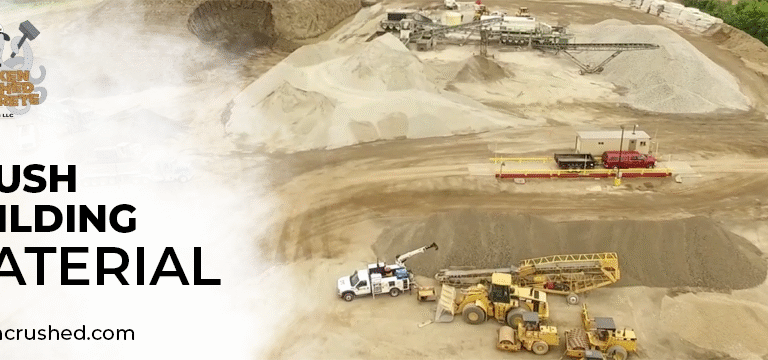
Rather than hauling every load of broken concrete to another facility, a mobile crusher can be brought to the project. Large pieces are processed into smaller, more manageable aggregate.
The exact process depends on the material, equipment and intended end use, but the basic idea is straightforward:
Demolish it, crush it, process it and reuse it.
This can be particularly useful when a project generates a significant quantity of concrete and has enough space for crushing and stockpiling the recycled material.
For a contractor, that changes the economics of material handling. Concrete that once represented a disposal problem may become a usable resource for the same project or another nearby application.
Why Is Crushing Concrete Recycling Important?
Construction sites are under constant pressure to control costs and manage materials efficiently. Every additional truck trip, disposal charge and handling step can affect the project budget.
Crushing concrete on site gives contractors another option.
Instead of automatically sending demolished concrete away, the material can be evaluated for recycling. When conditions are appropriate, crushing allows that concrete to be converted into aggregate that can serve a practical purpose.
There are several potential advantages.
Less Material Going to Disposal
Concrete takes up considerable space. Large chunks can quickly fill containers and create a steady stream of truckloads leaving the site.
Recycling suitable concrete keeps more material in productive use rather than treating it as something that simply needs to be removed.
Fewer Hauling Requirements
Transportation can become a major part of demolition waste management.
If concrete is hauled away and replacement aggregate is later brought back to the site, the same project may involve trucks moving material in both directions.
With on-site crushing, some of the material handling can happen where the concrete already is.
Reusable Aggregate
Crushed concrete can have several practical applications when it is properly processed and suitable for the intended use.
Depending on project specifications, recycled aggregate may be used for:
- Driveway bases
- Road and parking lot bases
- Construction entrances
- Site preparation
- Utility trench backfill
- Building pads
- Access roads
- General fill applications
The appropriate use should always be determined according to the project requirements and applicable specifications.
How Does On-Site Concrete Crushing Work?
The process may look simple from a distance, but good preparation makes a significant difference.
First, the concrete needs to be assessed. Contractors and crushing professionals look at the quantity, size and condition of the material. Other materials mixed into the demolition debris also need to be considered.
Large concrete sections are then prepared for processing. A mobile crusher breaks the material down into smaller pieces.
Depending on the equipment and desired output, the crushed material can be processed to achieve a particular aggregate size.
Rebar and other metal reinforcement also need to be addressed. Reinforced concrete is common in demolition projects, so separating steel from the processed concrete is an important part of producing a usable recycled material.
Once crushing is complete, the recycled aggregate can be stockpiled and used as needed.
The result is a material that has moved from the demolition pile into a new stage of its useful life.
Where Can Recycled Concrete Be Used?
One of the biggest questions contractors have is simple: What can I actually do with crushed concrete?
The answer depends on the quality of the recycled material and the requirements of the project.
A common application is base material.
A properly processed recycled aggregate can provide a stable foundation for certain roads, parking areas and driveways. It may also be useful for temporary construction access, helping heavy equipment and trucks move across a project site.
Recycled concrete can also be useful during site development. Instead of purchasing all new aggregate for certain applications, contractors may be able to reuse suitable material generated during demolition.
That can be especially attractive on large projects where substantial amounts of concrete are removed.
Concrete Recycling in Michigan
Michigan construction projects deal with everything from residential demolition and commercial development to road work, industrial construction and major site preparation.
That creates plenty of opportunities for concrete recycling Michigan contractors can use to manage demolished material more efficiently.
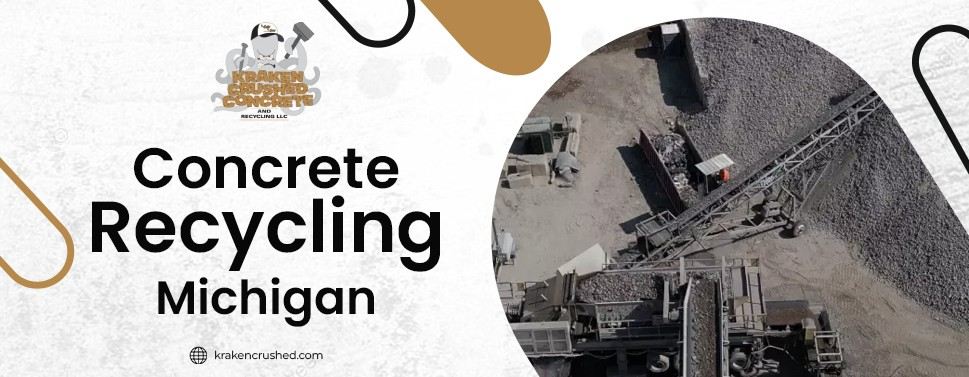
Michigan’s climate also creates unique challenges for construction materials. Freeze and thaw cycles, changing ground conditions and seasonal construction schedules can all influence how aggregate is selected and used.
For that reason, recycled concrete should not simply be viewed as a cheaper substitute for every type of aggregate. The material needs to be properly processed and matched with the intended application.
Working with an experienced crushing provider helps contractors determine whether their concrete is suitable for recycling and how the resulting aggregate may fit into their project.
Is Recycled Concrete the Same as New Aggregate?
Not necessarily.
Recycled concrete aggregate is produced from previously used concrete. New aggregate is generally produced from virgin materials.
Both can have useful applications, but they are not automatically interchangeable in every project.
The right choice depends on factors such as the intended application, material specifications, project plans, required gradation and local requirements.
For basic site work, access roads, certain base applications and other suitable uses, recycled concrete can be a practical option.
The important point is to select the material based on the job rather than assuming one material works everywhere.
The Cost Advantage of On-Site Recycling
Cost is one of the biggest reasons contractors investigate concrete recycling.
Consider what happens when demolished concrete leaves a project.
It has to be loaded. A truck has to transport it. Disposal or processing fees may apply. Then, if the project needs aggregate later, another truck may have to bring new material back.
That is a lot of movement.
On-site crushing can change that equation.
When suitable concrete is crushed at the project, contractors may reduce some hauling and disposal requirements while creating material that can potentially be used on the site.
The actual savings depend on project size, material volume, trucking distances, disposal rates, site conditions and the intended use of the recycled aggregate.
For large demolition projects, however, even small efficiencies can add up quickly.
Who Can Benefit From On-Site Concrete Crushing?
This service is not limited to one type of construction company.
Demolition contractors can use crushing to manage large quantities of concrete generated during teardown work.
General contractors may benefit when demolition and new construction happen on the same property.
Excavation contractors can use recycled aggregate for suitable site preparation and access applications.
Road and parking contractors may find recycled concrete useful for certain base projects.
Property developers can explore recycling options when clearing existing structures before new construction begins.
Municipal and infrastructure projects may also generate substantial quantities of concrete that require responsible handling.
The common thread is volume. The more concrete a project generates, the more valuable an efficient recycling strategy can become.
What Should You Look for in a Concrete Crushing Service?
Not every project has the same requirements, so choosing a crushing provider should involve more than asking for a price.
Start by discussing the quantity and type of concrete available.
Ask what equipment will be used and what aggregate sizes can be produced.
It is also worth discussing site access. Mobile crushing equipment needs sufficient room to operate safely and efficiently.
Material contamination should also be discussed before the job begins. Concrete mixed with excessive amounts of dirt, wood, trash or other debris may require additional handling.
Finally, talk about the intended use of the finished material. Knowing where the crushed concrete is going can help determine how it should be processed.
A good conversation before crushing starts can prevent surprises later.
Searching for Concrete Recycling Near Me?
When contractors search for concrete recycling near me, they are often looking for more than a place to dump old concrete.
They want a practical way to handle the material.
That is why on-site crushing can be worth considering. Rather than automatically transporting demolition concrete away, you can explore whether it can be processed where the project is taking place.
Kraken Crushed Concrete works with customers who need an efficient solution for processing concrete generated by construction and demolition activities.
If your project has a substantial amount of broken concrete, it may be worth asking whether crushing and recycling can reduce unnecessary material movement and create useful aggregate.
Turn Demolition Waste Into Something Useful
Concrete does not have to become a dead end at the demolition stage.
With the right equipment and planning, material from an old driveway, foundation, parking lot or building can be processed and given another purpose.
That is the practical value of crushing concrete recycling.
It can help contractors rethink how they manage demolition material, reduce unnecessary transportation and make better use of resources already available on the property.
For Michigan projects, the opportunity can be especially relevant when large quantities of concrete are involved.
If you are planning a demolition, excavation, commercial construction or site development project and expect to generate a significant amount of concrete, talk to Kraken Crushed Concrete about your recycling options.
The next load of concrete leaving your job site may not need to be waste. It could become the material that helps build what comes next.
FAQs
- What is on-site concrete recycling?
On-site concrete recycling involves crushing demolished concrete at or near the project site and processing it into reusable aggregate for suitable construction applications.
- What can recycled crushed concrete be used for?
Depending on its quality and project specifications, crushed concrete can be used for driveway bases, road bases, construction entrances, site preparation, access roads and other suitable applications.
- Can reinforced concrete be recycled?
Yes. Reinforced concrete can generally be processed through appropriate crushing equipment, with metal reinforcement separated from the crushed concrete during processing.
- What are the benefits of concrete recycling in Michigan?
Concrete recycling can help Michigan contractors reduce material disposal, limit some hauling requirements and create reusable aggregate from concrete generated during demolition and construction.
- How do I find concrete recycling near me?
Look for a concrete crushing provider that offers mobile or on-site processing and discuss your project’s concrete volume, site conditions, material type and intended use of the recycled aggregate before scheduling the work.