David was excited to start building the patio behind his new home. He had finalized the design, hired a contractor, and arranged for crushed concrete to be delivered. Everything seemed ready until the project came to a halt halfway through. The material ran short by nearly three cubic yards. Another order had to be placed, a second delivery fee was added, and workers remained idle while waiting for the materials to arrive. What looked like a small estimation mistake eventually cost hundreds of dollars and delayed the project by several days. Situations like this happen far more often than people realize. Whether you’re a homeowner planning a driveway or a contractor managing multiple construction sites, inaccurate material estimation can quietly inflate your project budget. This is where a calculator for building materials becomes one of the smartest planning tools available.
At Kraken-Crushed-Concrete, we understand that every cubic yard matters, and accurate calculations help eliminate unnecessary expenses before they appear.
Material Estimation Is More Important Than Most People Think
Construction projects involve much more than purchasing concrete, gravel, or fill dirt. Every estimate affects transportation, labor scheduling, equipment rental, and overall project timelines.
Ordering too little material interrupts progress, while ordering too much creates unnecessary waste and disposal costs. Even experienced contractors occasionally miscalculate volumes when relying on rough estimates instead of accurate measurements.
Fortunately, modern calculation tools simplify the process by providing reliable estimates based on project dimensions. Rather than guessing, builders can make informed purchasing decisions before the first truck arrives.
How Does A Construction Material Calculator Work?
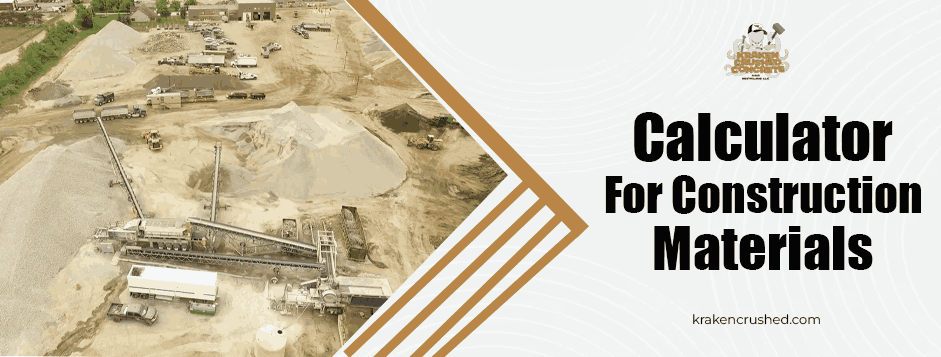
Before exploring the hidden costs, it helps to understand how the calculator functions. We offer an easy-to-use calculator designed specifically for construction materials measured in cubic yards.
To calculate your required material, you’ll need three simple measurements:
- Coverage Area Length: Measure the project length in feet.
- Coverage Area Width: Measure the project width in feet.
- Coverage Area Depth: Enter the desired depth in inches.
Using these three values, the calculator estimates the cubic yards required for your project.
Since one cubic yard equals a space measuring one yard wide, one yard deep, and one yard high, this calculation provides a practical estimate for materials such as crushed concrete, asphalt, dirt, mulch, and similar construction products.
Using a reliable calculator for construction materials removes much of the uncertainty from project planning. Let’s know what they are.
Hidden Costs That You Need to Know
Hidden Cost #1: Paying for Unnecessary Material
One of the most common budgeting mistakes involves ordering far more material than necessary. Many homeowners intentionally overestimate because they fear running short.
Unfortunately, every unnecessary cubic yard increases costs.
Excess material often remains unused, occupying valuable space until additional hauling or disposal arrangements become necessary. A properly calculated estimate helps purchase only what the project actually requires.
Hidden Cost #2: Multiple Delivery Charges
Running out of material rarely means simply placing another order.
Additional deliveries often include:
- Transportation fees
- Fuel surcharges
- Driver scheduling costs
- Delivery delays
Ordering the first time correctly minimizes these expenses while helping maintain project momentum.
Hidden Cost #3: Labor Downtime
Construction crews work according to schedules. If materials fail to arrive on time because estimates were inaccurate, workers may spend hours waiting instead of building. Accurate planning prevents these interruptions and keeps projects moving efficiently.
Hidden Cost #4: Equipment Rental Extensions
Many construction projects require rented equipment such as:
- Excavators
- Skid steers
- Compact loaders
- Dump trailers
Rental companies typically charge by the day or week.
If inaccurate estimates delay the project, equipment often remains on-site longer than originally planned. Those additional rental days quickly increase overall construction expenses. Estimating materials accurately before work begins helps maximize equipment utilization and reduce unnecessary rental costs.
Hidden Cost #5: Disposal And Dumping Fees
Ordering excessive material creates another challenge after construction finishes. Unused concrete, dirt, asphalt, or aggregate frequently requires transportation and disposal. These services involve additional labor, hauling, and dumping fees.
Instead of paying twice—once for purchasing unnecessary material and again for removing it—accurate calculations reduce waste from the beginning.
We also provide a convenient dumping site for broken concrete, asphalt, dirt, brick, and other construction debris, making disposal more manageable when required.
Hidden Cost #6: Budget Overruns That Affect Other Parts of The Project
Construction budgets depend on careful planning. Unexpected spending in one area often forces compromises elsewhere.
An inaccurate material estimate may seem minor initially, but extra purchases, transportation, labor delays, and equipment costs accumulate rapidly. Suddenly, funds originally allocated for landscaping, finishing work, or upgrades disappear.
Using a dependable calculator for building materials helps create more predictable project budgets by minimizing costly surprises before construction begins.
Hidden Cost #7: Ordering The Wrong Type of Material
An inaccurate estimate isn’t always about quantity. Sometimes, it leads to choosing the wrong material altogether.
For example, a driveway, foundation base, and landscaping project each require different construction materials. Ordering the wrong product can result in additional transportation costs, delayed installations, and unnecessary replacement expenses.
When you know the exact volume required, it becomes much easier to select the appropriate material without guesswork. Whether you’re calculating crushed concrete, asphalt, fill dirt, or recycled aggregate, a reliable material calculator for construction helps improve planning accuracy before placing an order.
Hidden Cost #8: Last-Minute Price Increases
Construction material prices can fluctuate because of seasonal demand, transportation costs, or supply chain disruptions.
If your project is delayed because of incorrect estimates, the additional materials you need later may cost more than your original purchase. A small shortage today could become a much larger expense next week.
Accurate planning reduces the likelihood of placing emergency orders at higher prices and helps contractors stay closer to their original budget.
Hidden Cost #9: Project Delays That Affect Other Trades
Construction projects rarely involve one team working alone. Electricians, plumbers, landscapers, concrete finishers, and inspectors all depend on a carefully planned schedule. So, when material shortages delay one stage, every following task may also need to be rescheduled.
These delays often create unexpected costs through:
- Contractor rescheduling fees
- Additional site management expenses
- Extended equipment rentals
- Delayed project completion
Using a calculator for building materials allows contractors and homeowners to plan with greater confidence, helping every stage of the project move according to schedule.
Hidden Cost #10: Wasted Time Correcting Estimation Mistakes
Time is one of the most overlooked construction expenses. Every phone call to reorder materials, every delayed delivery, and every adjustment to the project schedule consumes valuable hours that could have been spent completing the job.
For contractors, these interruptions reduce productivity and may even affect future projects waiting to begin. For homeowners, they often create frustration, inconvenience, and additional stress.
Accurate material calculations eliminate much of this unnecessary backtracking, allowing projects to progress more smoothly from beginning to end.
Simple Tips for More Accurate Material Estimation
Although construction projects differ in size and complexity, several best practices consistently improve estimation accuracy.
- Always measure the coverage area carefully before ordering materials. Double-check the length and width measurements in feet, then measure the required depth in inches. Even a small measurement error can significantly affect the total cubic yard calculation.
- Whenever possible, review project drawings before taking measurements. Complex layouts may need to be divided into smaller sections to achieve more precise calculations.
- It is also wise to verify measurements with your contractor before placing large material orders. A few extra minutes spent confirming dimensions can prevent costly mistakes later.
- Finally, use a dependable build materials calculator instead of relying on rough estimates or previous project experience. Every construction site is different, and accurate calculations should always reflect the current project’s dimensions.
Build Smarter by Planning before You Purchase
Successful construction projects rarely happen by chance. Behind every completed driveway, foundation, parking area, or landscaping project lies careful preparation, accurate measurements, and informed decision-making.
Material estimation is often viewed as a small administrative task, yet it influences nearly every aspect of construction from budgeting and scheduling to labor productivity and customer satisfaction.
Using the right planning tools before work begins helps eliminate uncertainty and allows everyone involved to focus on building rather than correcting avoidable mistakes.
Final Thoughts
Construction projects become more efficient when every decision is supported by accurate information. While unexpected challenges may still arise, material estimation should never be one of them.
A reliable calculator for building materials helps reduce unnecessary purchases, avoid delivery delays, minimize equipment and labor costs, and keep projects on budget from start to finish. Whether you’re a homeowner preparing for your first renovation or a contractor managing multiple job sites, accurate calculations create better outcomes at every stage.
Kraken-Crushed-Concrete combines quality construction materials, convenient transportation services, dependable dumping solutions, and an easy-to-use calculator to help customers plan smarter, build confidently, and avoid the hidden costs that often go unnoticed until it’s too late.