When planning a driveway, parking lot, farm road, or construction project, the cost of materials can have a significant impact on your budget. Crushed concrete is a popular option for property owners and contractors who want a practical aggregate material without paying for new stone in every application. However, the price you see in a supplier’s quote may not tell the whole story. Delivery is one of the most important factors when comparing crushed concrete prices Michigan buyers receive from different suppliers.
The cost of Michigan crushed concrete can vary depending on material quality, order quantity, delivery distance, site access, and preparation requirements. One supplier might advertise a lower price per ton but charge more for transportation. Another might offer a slightly higher material price with more convenient delivery arrangements.
For buyers, the challenge is knowing what they are actually paying for.
At Kraken Crushed Concrete, understanding these cost factors can help you make a more informed purchasing decision. Whether you are preparing a residential driveway or sourcing material for a larger construction site, comparing suppliers carefully can help you avoid unnecessary expenses and choose material that suits your project.
What Determines Crushed Concrete Prices in Michigan?
There is no single price that applies to every crushed concrete order. The final cost depends on several factors, and understanding them makes it easier to compare quotes accurately.
1. Material Grade and Intended Application
Crushed concrete is produced by processing reclaimed concrete into aggregate. Depending on the processing method, it may contain different particle sizes and material characteristics.
Some grades are suitable for compacted driveway bases, access roads, and construction preparation. Other applications may require specific aggregate sizes or tighter material specifications.
Before comparing prices, determine what your project needs. Buying a material that does not suit the intended application can lead to additional grading, replacement, or installation expenses.
Ask suppliers about available sizes, processing methods, and recommended uses. A quote is more useful when it identifies the material being supplied rather than simply listing it as crushed concrete.
2. Quantity Required for the Project
The amount of material you order directly affects your overall spending. A small residential driveway and a large commercial parking area have very different requirements.
Some suppliers may offer different pricing for bulk orders, while delivery costs can vary depending on the number of truckloads required. However, a large order does not automatically guarantee a lower overall cost.
To estimate the quantity needed, calculate the length, width, and planned depth of the area.
For example, a driveway measuring 50 feet long and 12 feet wide has a surface area of 600 square feet. If you plan to install a compacted layer 4 inches deep, you can use the following calculation:
600 square feet × 4 inches ÷ 12 = 200 cubic feet.
That equals approximately 7.4 cubic yards before allowing for material requirements related to compaction, grading, or site conditions. The actual order quantity should be confirmed with your supplier or installer.
Getting the measurements right helps prevent overordering, last-minute purchases, and unnecessary delivery charges.
3. Delivery Distance and Transportation Costs
A supplier offering an attractive material price may be located farther from your property. Once transportation is included, the total cost could be higher than a quote from a closer source.
Ask each supplier to clarify:
- Whether delivery is included in the quoted price.
- Whether transportation is charged per load, by distance, or through another pricing structure.
- How much material each truck can carry.
- Whether separate trips will be required.
- Whether additional charges apply for difficult site access or waiting time.
These details matter for both small residential projects and commercial jobs requiring multiple loads.
When requesting a quote, provide your delivery location and estimated quantity upfront. This gives the supplier a better basis for calculating the total cost.
How to Compare Crushed Concrete Suppliers Without Overpaying
Comparing suppliers involves more than finding the lowest advertised rate. You need to understand what each quote includes and whether the material and delivery arrangements match your requirements.
Request Itemised Quotes
An itemised quote makes it easier to identify differences between suppliers.
Ask for separate details covering the material price, estimated quantity, transportation, applicable taxes, and any additional services or charges. If the supplier offers loading or site delivery arrangements, confirm whether these are included.
For example, Supplier A may quote a lower price per ton but charge delivery separately. Supplier B may quote a higher rate that includes transportation within a specified service area.
Without comparing the complete figures, it is easy to mistake a lower initial quote for a better deal.
A clear quote also helps you manage your project budget and discuss any unexpected expenses before placing the order.
Compare the Same Unit of Measurement
One supplier may quote crushed concrete by the ton, while another uses cubic yards. These figures cannot be compared directly without converting them using an appropriate material density.
The density of crushed concrete can vary with particle size, moisture content, and compaction. For this reason, avoid relying on a universal conversion factor.
Ask suppliers to confirm the quantity, measurement unit, and basis of their pricing. If your contractor estimates the project in cubic yards, make sure the supplier can explain how the quoted tonnage relates to the required volume.
This simple check reduces confusion and helps you avoid ordering too little or paying for more material than the project requires.
Check Material Consistency and Suitability
The cheapest material is not necessarily the most economical choice if it does not meet your project’s requirements.
For a driveway or access road, the aggregate must be appropriate for the intended use and prepared correctly. Depending on the application, important considerations may include particle size, grading, the condition of the underlying soil, drainage, and compaction.
Ask what the supplier can tell you about the material’s composition and suitability. For projects with engineering specifications, verify that the material meets the required standards before ordering.
Choosing suitable crushed concrete from the beginning can reduce the risk of avoidable rework.
Ask About Availability and Delivery Scheduling
Construction schedules often depend on materials arriving at the right time. A delayed delivery can leave equipment and workers waiting, potentially increasing labour costs.
Before confirming an order, ask about current availability, lead times, delivery windows, and the process for handling schedule changes.
If your project requires several loads, discuss whether deliveries can be coordinated with your installation schedule. This is particularly important when site space is limited or material must be placed in a specific area.
A supplier who communicates clearly about scheduling can make the purchasing process easier to manage.
Hidden Costs to Watch for When Buying Crushed Concrete in Michigan
Even when a supplier’s material price appears reasonable, other project expenses can affect the final bill. Asking about these costs early helps prevent budget surprises.
Delivery and Additional Truckloads
Transportation can become a substantial part of the total expense, particularly for smaller orders or projects located farther from the supplier.
Check whether the quoted delivery price covers your full order. If the quantity exceeds a truck’s practical carrying capacity, additional trips may be needed.
Confirm the expected number of loads and ask what happens if the actual quantity differs from the estimate.
Site Preparation and Grading
Crushed concrete does not eliminate the need for proper ground preparation.
Depending on the site, the project may require vegetation removal, excavation, soil correction, grading, or drainage improvements before the aggregate is placed.
These tasks may be handled by a separate contractor and may not appear on the material supplier’s quote.
For example, a driveway built over soft or poorly drained soil may require additional preparation to create a stable base. Skipping that work can lead to uneven surfaces and recurring maintenance expenses.
Discuss the condition of your site with your installer before finalising your material budget.
Spreading and Compaction
Delivery is not the same as installation. Unless the quote explicitly includes these services, you may need to pay separately for equipment, labour, spreading, grading, and compaction.
Ask who is responsible for moving the material from the unloading point to its final position. Confirm whether the price includes any machinery or finishing work.
For a larger project, coordinating material delivery with equipment availability can help reduce idle time and unnecessary handling.
Minimum Order Requirements and Cancellation Terms
Some suppliers may have minimum order quantities or specific delivery conditions. Others may apply charges when a scheduled delivery is cancelled or changed at short notice.
Before placing your order, check the minimum quantity, payment terms, cancellation policy, and any charges that could apply if your plans change.
These details are particularly important for smaller jobs where a minimum order could exceed the amount you actually need.
Is Crushed Concrete a Cost-Effective Choice for Michigan Projects?
Crushed concrete can be a practical alternative to virgin aggregate for many applications, particularly where recycled material meets the project’s requirements.
Its suitability depends on the job, site conditions, material specifications, and installation method.
Driveways and Private Access Roads
Homeowners often consider crushed concrete when building or improving a driveway. It may provide a useful aggregate base or surface for suitable applications when properly graded and compacted.
The finished result depends on the material, the underlying ground, drainage, traffic levels, and maintenance.
If the driveway will carry heavy vehicles or experience frequent traffic, discuss the required base depth and aggregate specifications with your installer before buying.
Parking Areas and Construction Sites
Contractors may use crushed concrete for temporary access roads, work areas, and suitable parking surfaces. These applications can require significant quantities, making material pricing and delivery coordination especially important.
A supplier comparison should consider not only the cost per ton but also how consistently the required material can be delivered.
For larger projects, a small difference in the quoted rate can have a noticeable effect on the overall budget.
Farms and Rural Properties
Farm lanes, equipment access areas, and other rural applications may also benefit from appropriately selected recycled aggregate.
However, rural sites can present additional challenges, including long delivery distances, limited access, soft ground, and seasonal weather conditions. These factors should be discussed before confirming the order.
The best material choice is one that suits the property, anticipated traffic, and site conditions rather than one selected on price alone.
Why Local Knowledge Matters When Choosing a Supplier
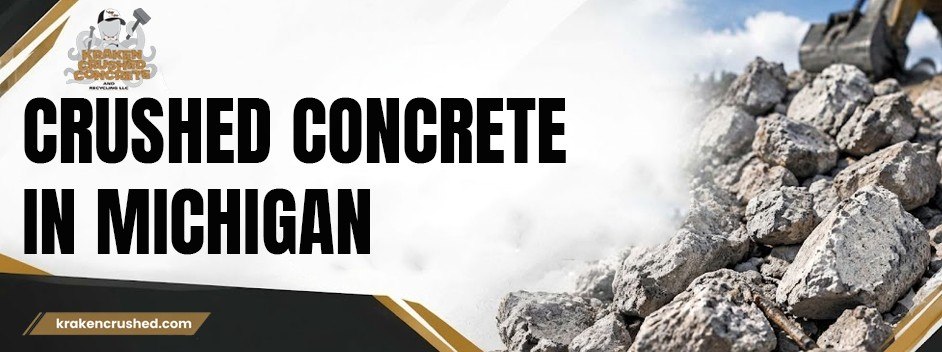
Buying crushed concrete in Michigan involves more than comparing numbers on a quote. Local delivery logistics, site conditions, material availability, and the intended application all influence the purchasing decision.
A useful supplier conversation should establish what you need, how much material the project requires, where it must be delivered, and when it needs to arrive.
If you are still comparing options, start by reviewing the available crushed concrete Michigan options and discussing your project requirements with Kraken Crushed Concrete. Confirm the current product specifications, pricing, delivery availability, and service area before ordering.
Having these details ready makes it easier to obtain an accurate quote and determine whether the material is a good fit for your project.
Get a More Accurate Quote for Crushed Concrete
The most reliable way to compare crushed concrete prices in Michigan is to look at the complete project cost rather than the advertised material rate alone.
Start with accurate measurements, identify the aggregate grade you need, and request itemised quotes from suppliers. Check delivery charges, order quantities, preparation requirements, and any conditions that could add to the final bill.
It is also worth considering how the material will perform in its intended application. A lower purchase price offers limited value if the aggregate is unsuitable or additional work is needed to correct problems later.
Kraken Crushed Concrete can be a starting point for buyers looking into recycled concrete aggregate for residential, commercial, and construction projects. Reach out with your project dimensions, location, estimated quantity, and preferred delivery schedule to discuss the available options.
With a clear understanding of material requirements and delivery costs, you can make a better-informed decision, keep your budget under control, and move your project forward with fewer surprises.
Frequently asked questions
- What affects crushed concrete prices in Michigan?
Prices depend on aggregate size and quality, order quantity, supplier pricing, delivery distance, truck requirements, and any additional services. Site preparation and installation can also affect the total project cost.
- Is crushed concrete cheaper than gravel in Michigan?
Crushed concrete can be a cost-effective alternative to certain virgin aggregates, but the savings depend on local availability, material specifications, transportation, and installation costs. Compare complete quotes before deciding.
- How do I calculate how much crushed concrete I need?
Multiply the project’s length by its width and planned depth to calculate the required volume. Convert the result into cubic yards or the supplier’s preferred unit, then confirm allowances for compaction, grading, and site conditions with your contractor.
- What hidden costs should I check before ordering crushed concrete?
Ask about delivery charges, additional truckloads, minimum order quantities, taxes, site preparation, spreading, compaction, and cancellation terms. Request an itemised quote so you can compare suppliers fairly.
- Where can I buy crushed concrete in Michigan?
Contact recycled aggregate suppliers such as Kraken Crushed Concrete to ask about current material availability, product specifications, delivery coverage, and pricing. Share your project location and estimated quantity to obtain a more accurate quote.